Field Observation 001 - VR Report
Field Observation Pool Rooms V-ENV-001
Observation ID: FO-001
Observer: Dr. Lemonal
Location Type: Virtual Environment (VR)
Platform: Meta Quest 3
Site Description: Multi-room aquatic and architectural complex
Date: 3/27/2026
Time: 8:17pm EST
Environmental Overview
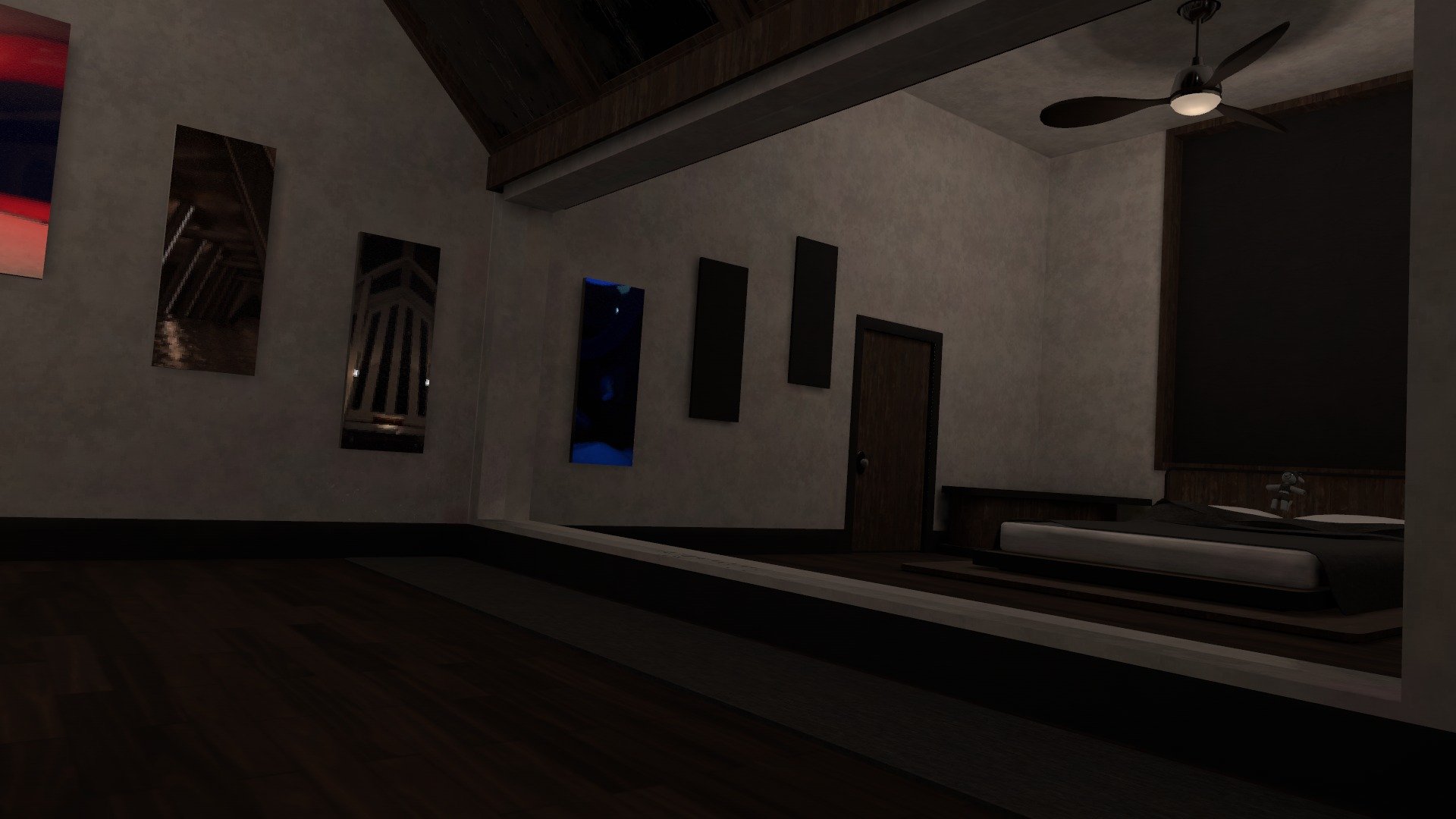
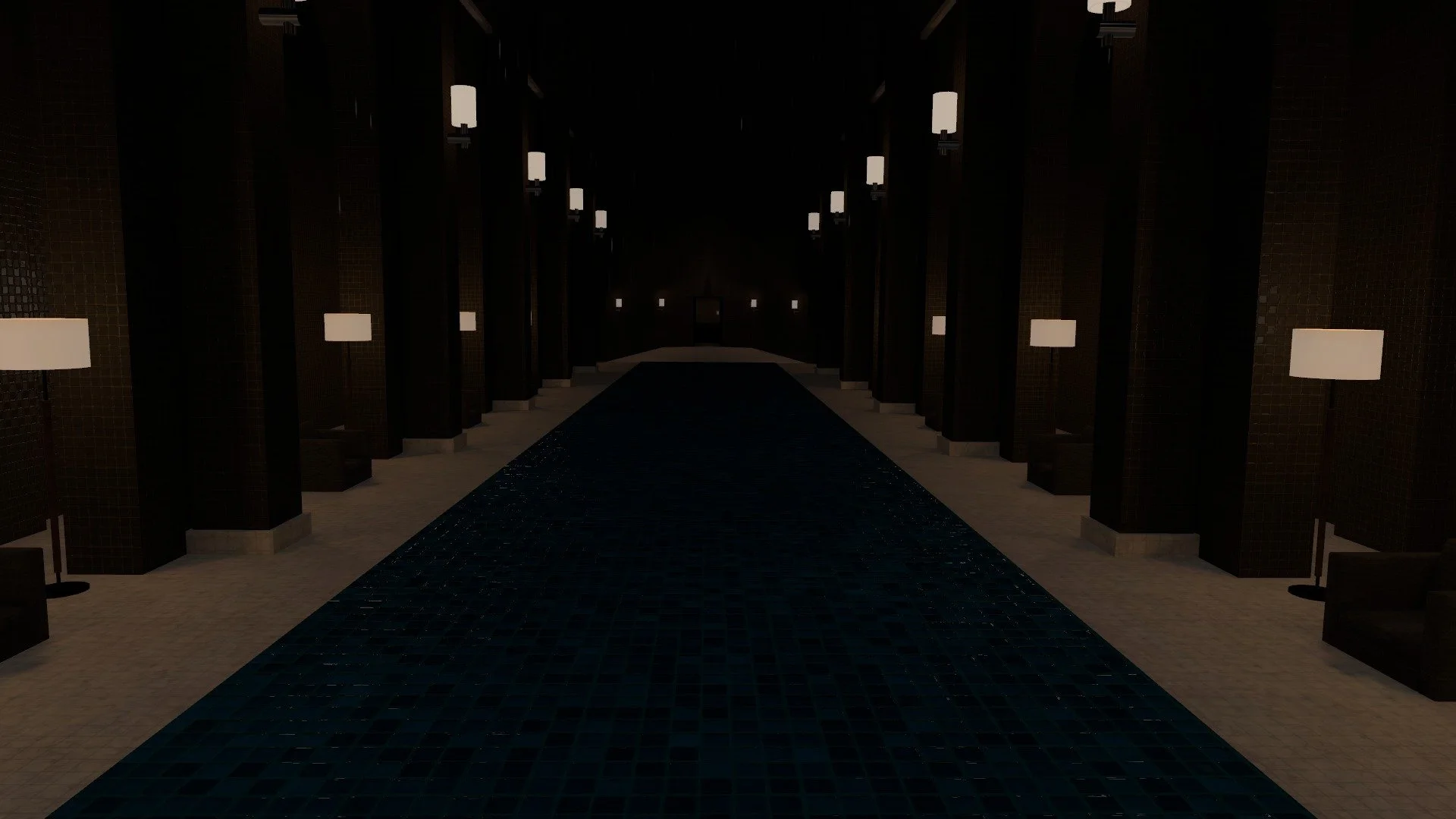
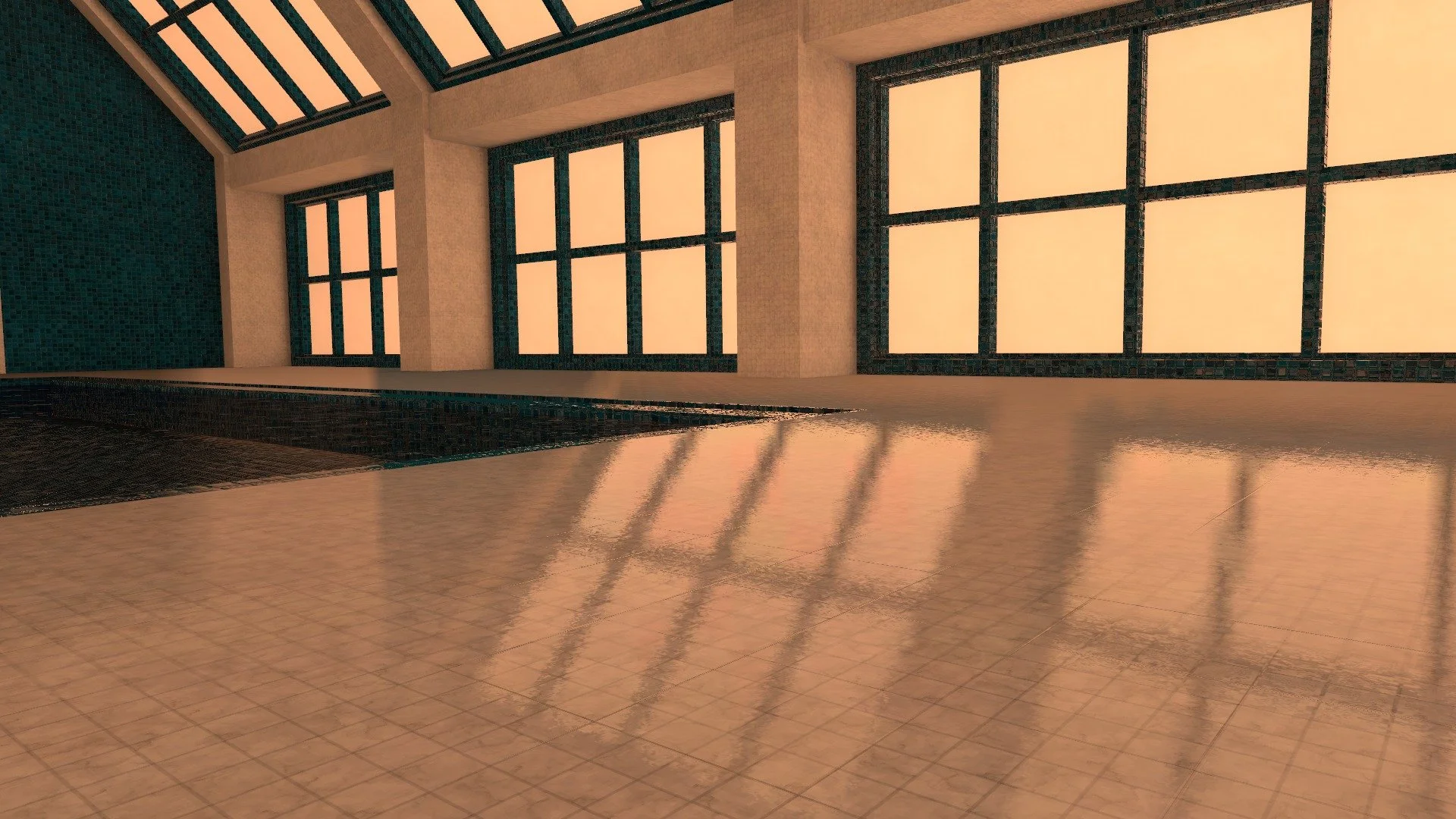
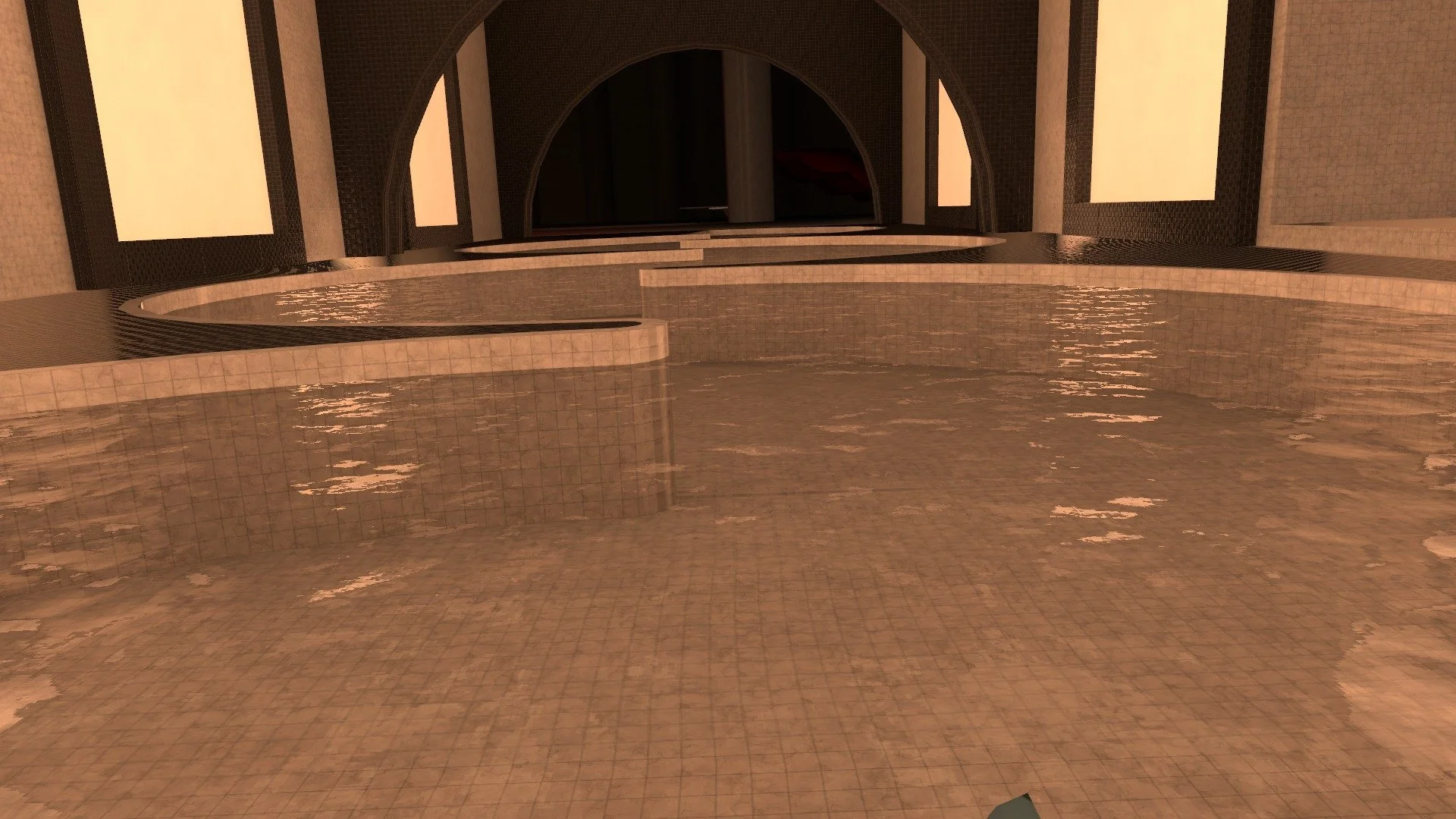
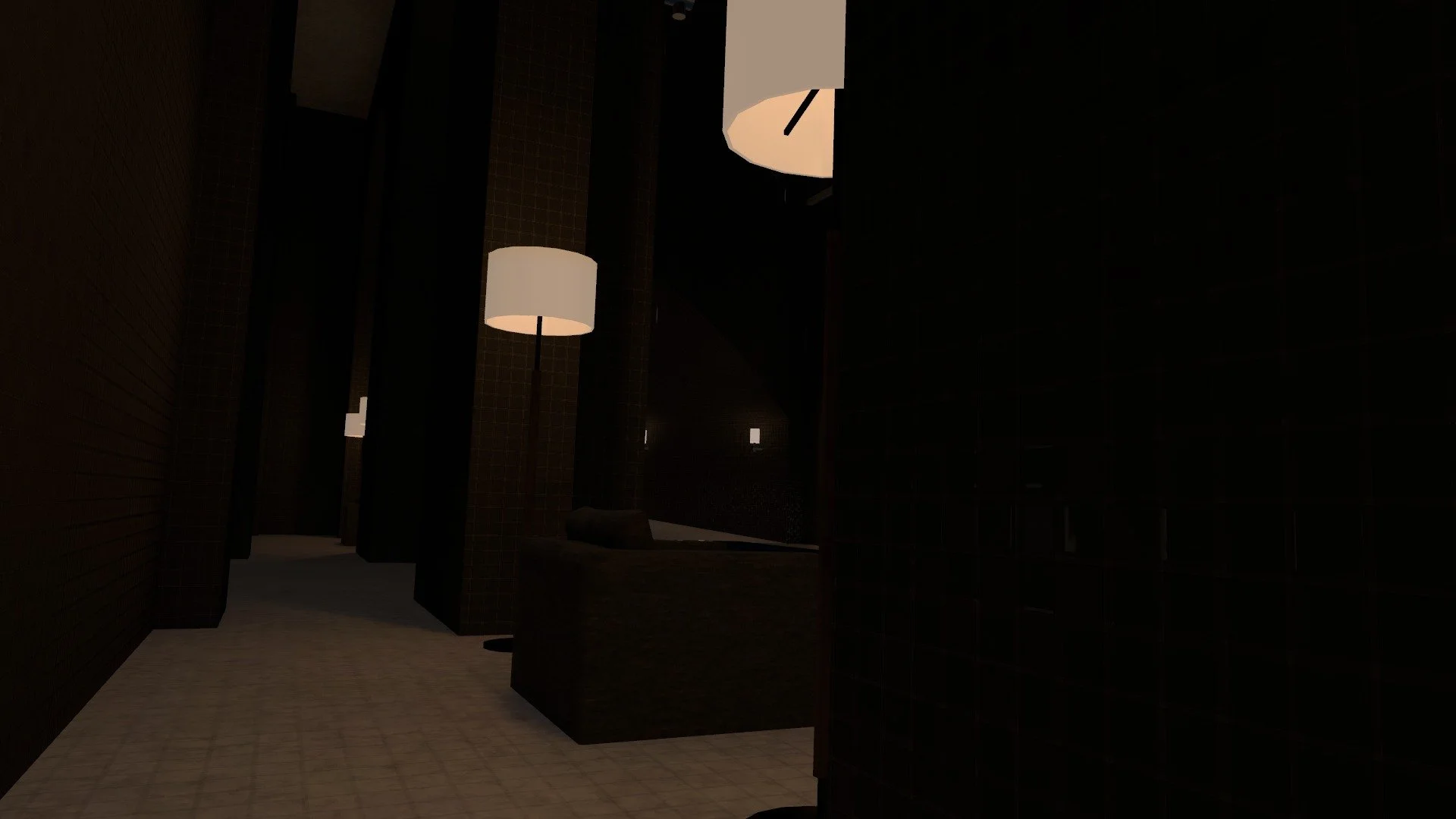
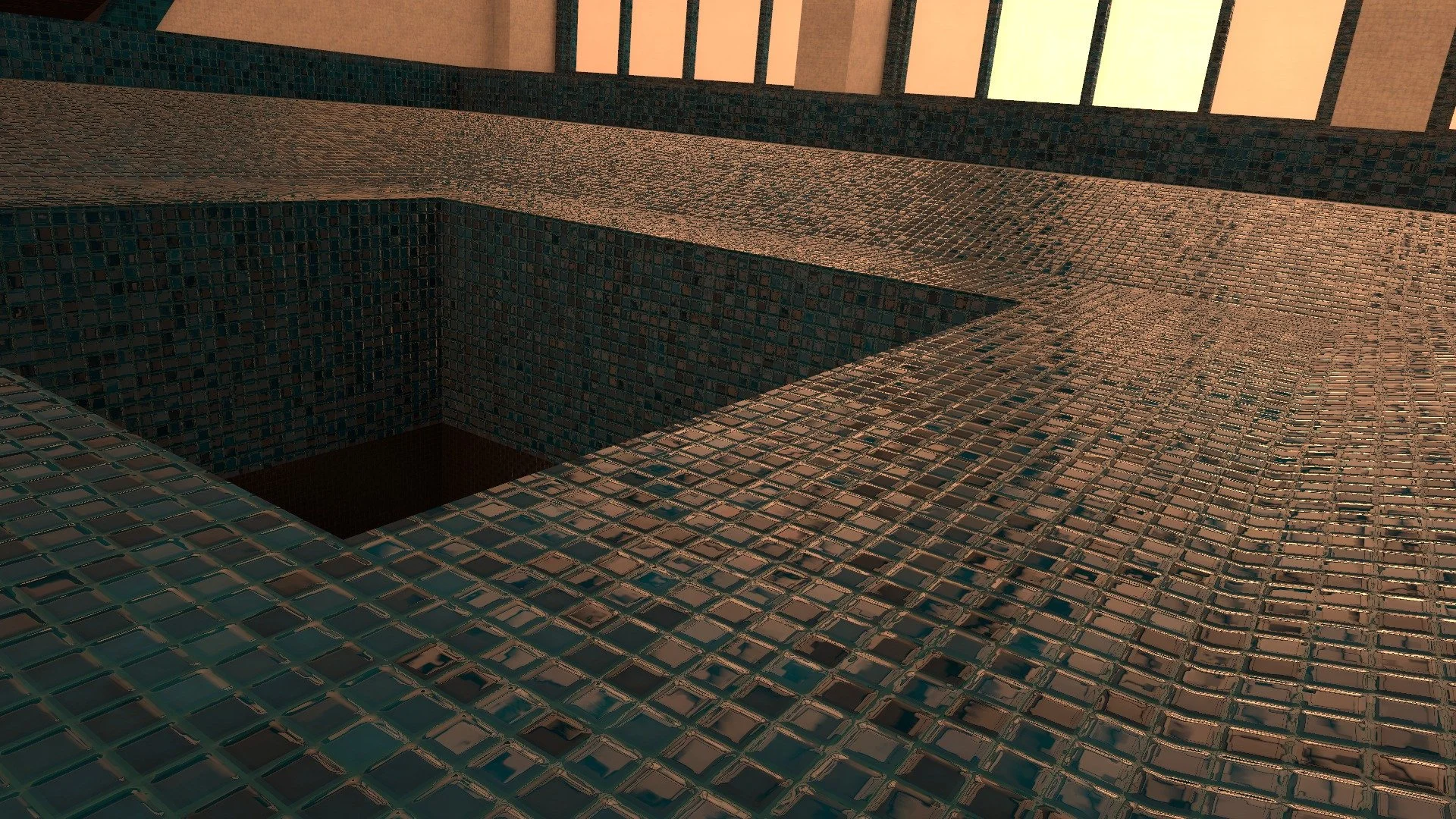
The environment consisted of interconnected architectural chambers centered around water features, tiled surfaces, and large open corridors. Lighting varied between dim artificial overhead sources and warm diffuse illumination entering through large window panels.
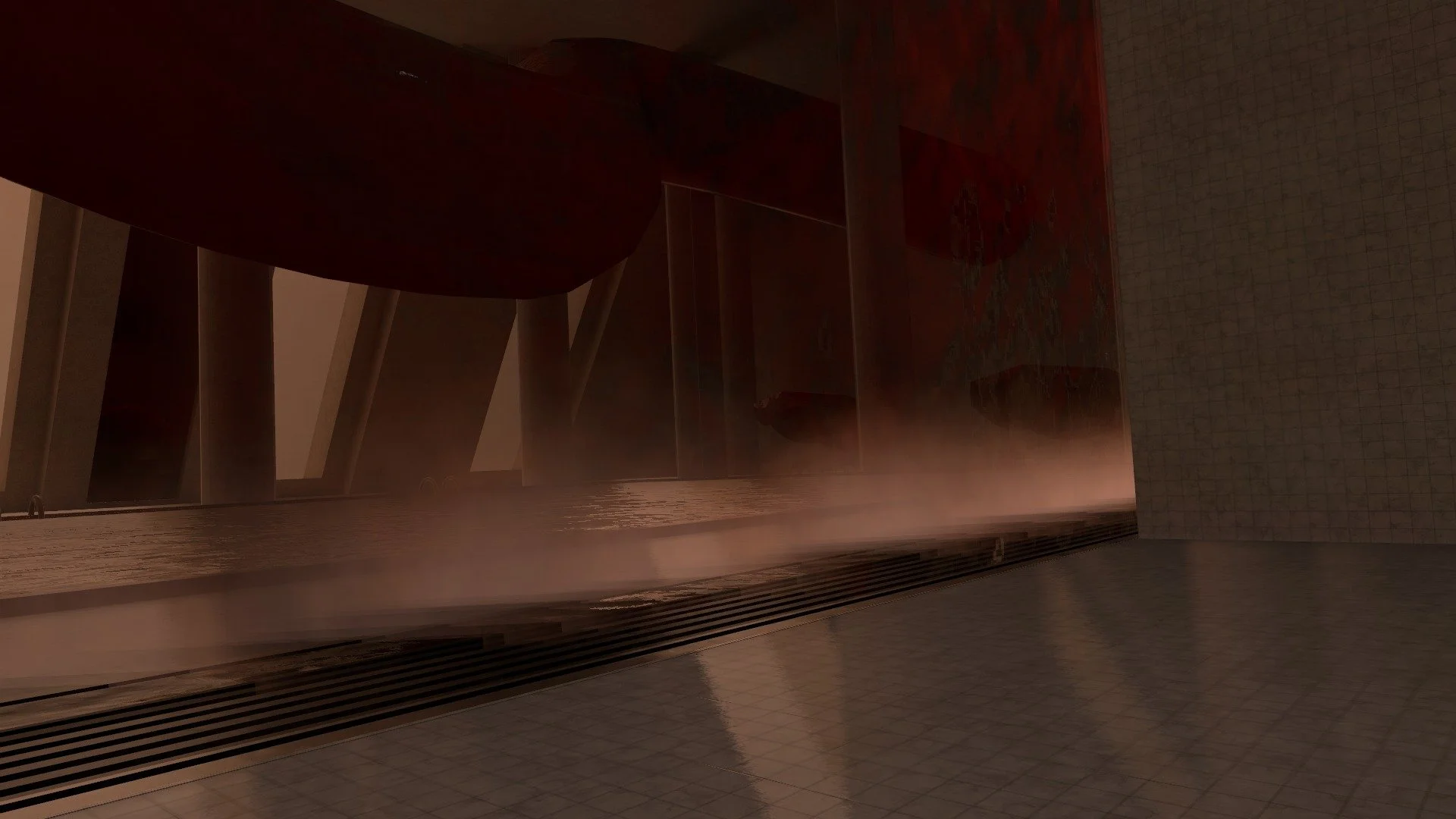
Water was present in multiple forms, including still pools, reflective surfaces, and flowing elements. Surfaces exhibited high reflectivity, amplifying light contrast and spatial depth.
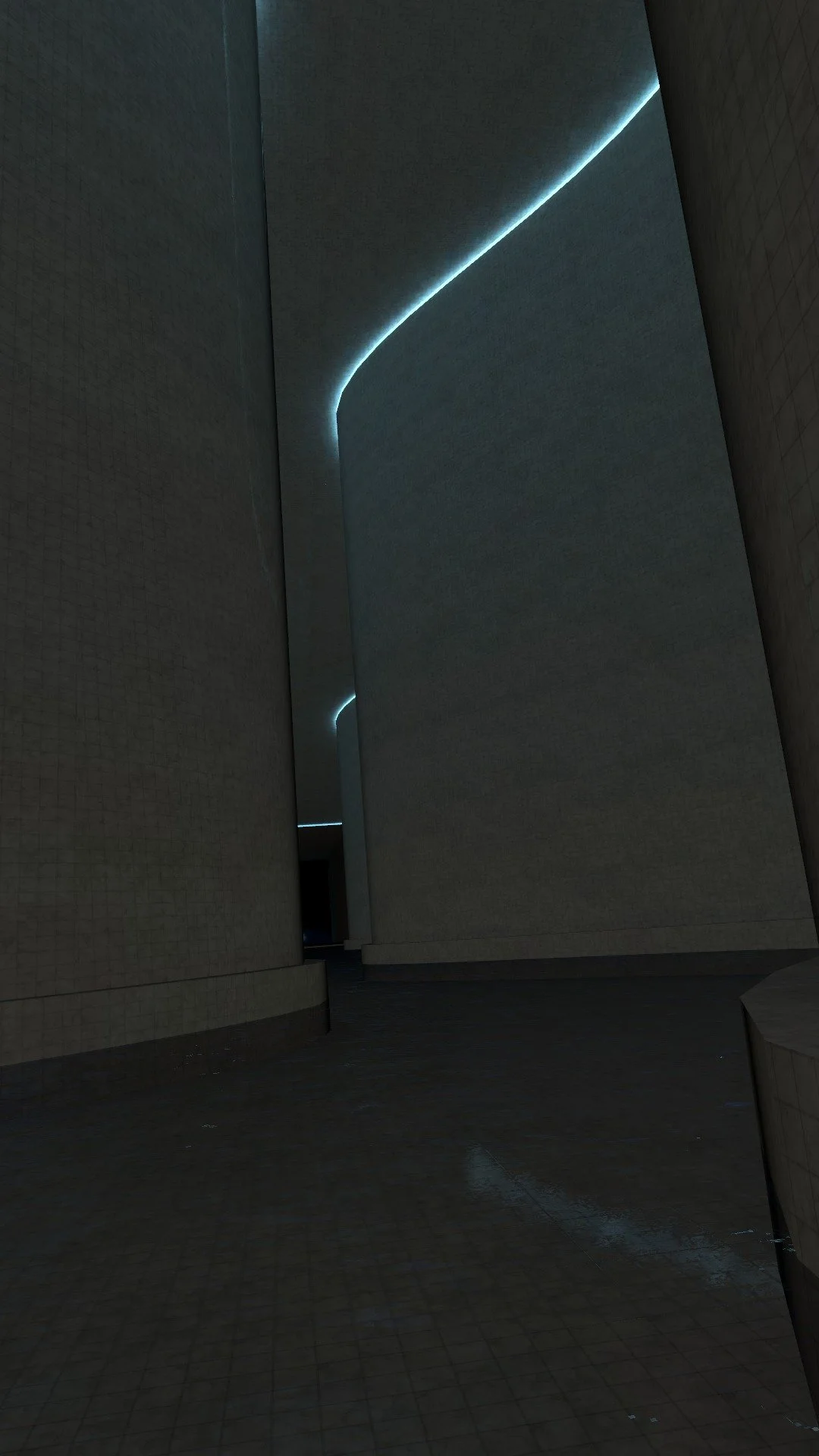
The environment lacked visible inhabitants. No active agents or interactive elements were observed. Spatial transitions occurred through corridors, ramps, and open threshold passages connecting distinct zones.
Transitional Qualities Observed
The environment exhibited strong functional ambiguity. While elements suggested recreational or architectural purpose, no clear operational function could be determined.
Threshold density was elevated. Movement required continuous passage through corridors, openings, and segmented spaces, reinforcing a sense of progression without destination.
Spatial repetition emerged through tiled surfaces, lighting fixtures, and structural symmetry. Despite variation between rooms, a consistent design language created cohesion across the environment.
Water features introduced both visual continuity and psychological depth, acting as both barrier and reflective surface.
Personal Perceptual Response
Initial immersion produced a strong sense of detachment from real-world context. Identity awareness softened slightly as attention shifted fully to environmental navigation.
Time perception became distorted during extended exploration. Movement between rooms felt both continuous and disjointed, as if each space operated as a contained experiential unit.
A notable sense of existential quiet emerged. Emotional tone stabilized into a neutral, reflective state with mild undertones of curiosity.
The absence of other entities amplified awareness of self within the space. Reflection on purpose and location became more prominent over time.
Interaction Behavior
Movement was exploratory rather than goal directed. The observer followed corridors and visual cues such as lighting and open thresholds.
Pauses occurred frequently near water edges and elevated vantage points. These areas appeared to function as perceptual anchors.
There was a recurring tendency to look back along previously traveled paths, reinforcing spatial looping awareness.
No avoidance behavior was observed, though deeper or darker passages produced brief hesitation.
Environmental Indicators
🚪 Threshold Density — 5
🌀 Spatial Repetition — 4
💡 Artificial Illumination Dominance — 4
🔇 Acoustic Null — 4
🌫️ Atmospheric Haze — 2
🪑 Residual Human Trace — 1
Phenomenological Indicators
🫥 Identity Diffusion — 3
🪞 Reflective Awareness — 4
🌒 Existential Quiet — 4
📼 Temporal Nostalgia Activation — 2
📡 Signal Absence — 4
Disturbance Indicators
🧭 Orientation Drift — 3
🌘 Threshold Tension — 4
🧱 Functional Ambiguity — 5
🔂 Spatial Loop Expectation — 3
Liminal Classification Index
Overall Liminal Index (OLI): 3.9
Band: Established → Deep Liminality (borderline)
Structural Class: Synthetic Threshold Complex
Temporal Class: Continuous Suspension
Phenomenological Class: Existential Reflective State
Disturbance Class: Functional Ambiguity Dominant
Conclusion
The virtual aquatic complex represents a high-intensity liminal environment characterized by strong threshold structuring, functional ambiguity, and sensory containment.
Unlike physical environments, the absence of external context amplifies psychological immersion. The space operates as a self-contained system where progression lacks resolution, reinforcing narrative suspension.
Water, light, and repetition combine to produce a sustained reflective state, with moderate disorientation and elevated threshold tension.
This environment demonstrates the potential for virtual spaces to exceed physical environments in liminal intensity due to controlled sensory and structural design.